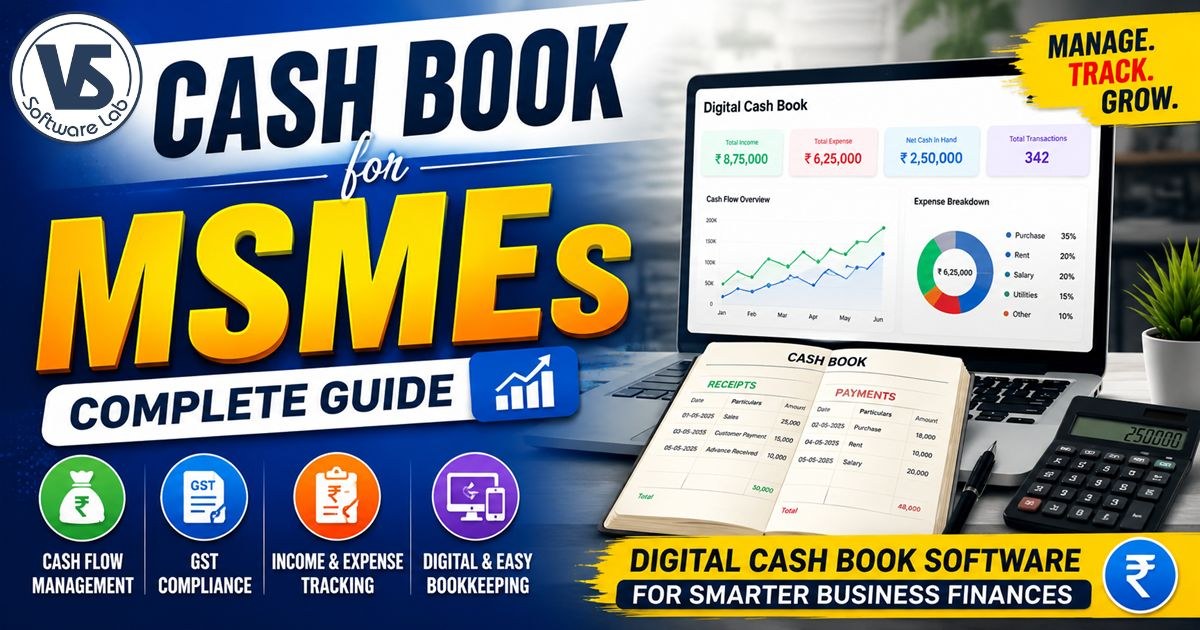
Cash Book for MSMEs: Types, Benefits, GST Compliance, and Digital Cash Book Software
Learn what a cash book is, its types, key benefits, and how digital cash book software helps MSMEs track income, expenses, cash flow, GST records, and business finances more efficiently.
Cash Book for MSMEs: Why It Matters More Than You Think
Running a small or medium-sized business means keeping an eye on many things at once—sales, customers, suppliers, employees, expenses, and payments. But among all these daily responsibilities, one thing deserves constant attention: cash flow.
A business may have good sales and still struggle to pay its bills if the money coming in and going out is not properly tracked. This is where a cash book becomes useful.
A cash book is a financial record used to track cash received and cash paid by a business. It gives business owners a clearer picture of how much money is available, where it is being spent, and how the cash position is changing over time.
Traditionally, many MSMEs maintained cash books in physical registers or notebooks. Today, digital tools are making this process much easier. A digital cash book can help businesses record transactions, monitor balances, track income and expenses, and access financial information without relying entirely on manual calculations.
In this guide, we will look at what a cash book is, the different types of cash books, why MSMEs need one, the problems businesses can face without proper cash records, and how digital cash book software can simplify everyday financial management.
What Is a Cash Book?
A cash book is a financial record that keeps track of the cash transactions made by a business. It records money coming into the business as well as money going out, helping the business owner understand the current cash position.
For example, when a customer pays for a product or service in cash, the amount received is recorded in the cash book. Similarly, when the business pays for office expenses, transportation, supplies, salaries, or other day-to-day costs, those payments are recorded as cash outflows.
At its simplest, a cash book answers three basic questions:
- How much cash has the business received?
- How much cash has the business spent?
- How much cash is currently available?
Maintaining this record regularly gives business owners a clearer view of their day-to-day finances. It also makes it easier to identify unusual expenses, check whether transactions have been recorded correctly, and understand how cash is moving through the business.
For an MSME, this information can be particularly valuable. Even a small expense or missed payment can affect the available cash balance when transactions happen frequently. A properly maintained cash book brings these movements together in one place instead of leaving the business owner to rely on memory, scattered bills, or multiple notebooks.
Types of Cash Books
Not every business handles cash transactions in the same way. Depending on the size of the business and the nature of its transactions, a cash book can be maintained in different formats.
The main types of cash books commonly used in accounting are:
1. Single Column Cash Book
A single column cash book records only cash transactions. It generally includes details such as the date, transaction description, amount received, amount paid, and the resulting cash balance.
This type of cash book is suitable for businesses that mainly deal with straightforward cash receipts and payments and do not need to record bank or discount transactions in the same book.
2. Double Column Cash Book
A double column cash book contains two money-related columns. Depending on the accounting system, these may be used to record cash and bank transactions or cash and discount transactions.
It provides more information than a single column cash book and can be useful for businesses that regularly handle both cash and bank payments.
3. Triple Column Cash Book
A triple column cash book maintains three separate columns for cash, bank, and discount transactions. It provides a broader view of the business's financial transactions and reduces the need to maintain separate records for these categories.
This format is generally more useful for businesses that have a higher volume of transactions and regularly deal with both cash and bank activities.
4. Petty Cash Book
A petty cash book is used to record small, routine expenses that occur during normal business operations. Examples include local travel, stationery, refreshments, courier charges, and minor office expenses.
Keeping these smaller transactions separately can make the main cash records easier to manage while ensuring that everyday expenses are not overlooked.
For many MSMEs, however, the challenge is not choosing between different accounting formats. The bigger challenge is maintaining accurate records consistently. A digital cash book can simplify this process by allowing businesses to record cash received and paid, monitor balances, and review transactions from a single system.
Why Do MSMEs Need a Cash Book?
For many MSMEs, managing money is not just about making sales. It is about knowing when money comes in, where it goes, and how much is actually available to run the business.
A cash book helps bring these daily financial movements into one place. When transactions are recorded regularly, business owners can make decisions based on actual numbers instead of estimates or memory.
1. Know Your Cash Position at Any Time
One of the biggest advantages of maintaining a cash book is having a clear view of the business's cash position.
It helps you keep track of:
- Cash available in the business
- Money received from customers
- Payments made to suppliers and vendors
- Daily operating expenses
- Current cash balance
This visibility can be especially helpful when you need to decide whether the business has enough cash to cover an upcoming payment or expense.
2. Reduce the Risk of Cash Shortages
A profitable business can still face financial pressure if its cash is not managed properly. For example, sales may be increasing, but customer payments could be delayed while salaries, rent, and supplier bills still need to be paid on time.
By recording cash inflows and outflows, a cash book helps business owners understand their available funds and plan upcoming payments more carefully.
3. Avoid Missing Transactions
Small expenses are easy to overlook when they are handled throughout a busy working day. A few minor purchases may not seem important individually, but they can add up over time.
Recording each transaction helps create a more complete financial picture. It can also reduce the chances of duplicate entries, calculation mistakes, or unexplained differences in the cash balance.
4. Make Accounting and GST Records Easier to Manage
Well-maintained financial records can make accounting work more organised. A properly recorded cash book provides useful transaction information that can support account reconciliation and the preparation of financial records.
For businesses registered under GST, maintaining accurate transaction records is also important for keeping financial information organised and supporting the overall tax compliance process. A cash book alone does not replace GST records or professional tax advice, but it can be an important part of a well-maintained accounting system.
5. Make Better Business Decisions
Business decisions become easier when you know where your money is going.
By reviewing cash transactions regularly, an MSME owner may identify unnecessary spending, compare expenses over different periods, set more realistic budgets, and decide where available funds should be allocated.
Instead of asking, "Where did all the money go?", you have a record that helps explain what happened.
6. Build Better Financial Discipline
Maintaining a cash book encourages a simple but important habit: record transactions as they happen.
This regular practice helps keep financial records organised and reduces the risk of leaving transactions until the end of the month, when details may be forgotten or receipts may be difficult to locate.
7. Keep Track of Customer Collections
Cash records can also help businesses keep track of customer payments. When a customer makes a payment, the transaction can be recorded and checked against the relevant invoice or sales record.
This makes it easier to verify which payments have been received and identify outstanding amounts that still need to be collected.
8. Understand Business Growth Over Time
Looking at cash inflows and outflows over several months can reveal useful patterns. You may notice changes in sales, seasonal fluctuations, increasing operating costs, or periods when the business needs additional working capital.
These insights can help MSME owners understand how the business is performing and plan for future growth.
9. Maintain Better Financial Records for Future Funding
When a business applies for a loan or other form of financing, organised financial records can help demonstrate that the business takes its finances seriously.
A consistently maintained cash book is one part of a broader financial record-keeping system. Along with other relevant financial documents, it can help provide a clearer picture of how the business manages its money.
10. Save Time with Digital Cash Book Software
Maintaining a cash book manually can become difficult as the number of daily transactions increases. Digital cash book software can simplify routine record-keeping by making it easier to enter transactions, calculate balances, search records, and generate reports.
Instead of spending time checking calculations in a physical register, business owners can access organised transaction data whenever they need it.
Common Problems MSMEs Face Without a Cash Book
Many small businesses manage their finances using a combination of memory, notebooks, bills, WhatsApp messages, spreadsheets, and bank statements. This may work when the number of transactions is very small, but it can quickly become difficult to manage as the business grows.
Without a properly maintained cash book, business owners may face problems such as:
- Running short of cash despite good sales: High sales do not always mean that enough cash is available. Delayed customer payments and unexpected expenses can create cash flow pressure.
- Losing track of daily expenses: Small purchases and routine business expenses can easily be forgotten when they are not recorded immediately.
- Difficulty reconciling accounts: When transaction records are incomplete or spread across different sources, finding differences between actual cash and recorded balances becomes more difficult.
- Errors in financial records: Manual calculations and missed entries can result in incorrect balances and unreliable financial information.
- Unclear cash and profit position: Business owners may confuse cash available with actual profit. A cash book helps track cash movement, although it does not replace a complete profit and loss statement.
- Missed customer payments: Without organised payment records, it can be harder to identify which customers have paid and which payments are still pending.
- Poor budgeting and planning: If you do not know how much money is coming in and going out, planning future expenses becomes largely a guessing game.
- Time-consuming bookkeeping: Searching through registers, receipts, and scattered records can take valuable time that could otherwise be spent running the business.
These problems may appear small individually, but together they can make financial management much harder. A simple and consistent cash recording process can give MSMEs better visibility and help business owners stay in control of their day-to-day finances.
How a Digital Cash Book Helps MSMEs
Maintaining a cash book manually is possible, but it becomes harder as the number of transactions grows. Business owners may have to calculate balances, search through old entries, check receipts, and keep track of multiple sources of financial information.
A digital cash book simplifies this process by bringing everyday cash transactions into one organised system. Instead of relying entirely on physical registers, businesses can record and review their financial transactions digitally.
Record Cash Transactions Quickly
Cash received and cash paid can be entered as transactions happen. This reduces the risk of forgetting small expenses or delaying record updates until the end of the day or month.
Track the Running Cash Balance
A digital system can automatically calculate the running balance as new transactions are added. This gives business owners a clearer idea of how much cash is available without having to perform calculations manually.
Manage Income and Expenses in One Place
Instead of maintaining separate notebooks for money received and money spent, a digital cash book can keep these records organised in one place. This makes it easier to review the movement of money and understand the business's day-to-day cash position.
Find Transactions When You Need Them
Searching through a physical register can take time, especially when you need to find an older transaction. Digital records make it easier to review transaction history and locate relevant entries when required.
Generate Useful Reports
Digital cash book software can make reporting easier by organising transaction data into useful summaries. Business owners can review cash inflows, outflows, expenses, and balances to understand how money is moving through the business.
Keep Records Organised for Financial Management
Accurate transaction records can support better bookkeeping and financial management. They can also provide useful information when reviewing accounts, reconciling transactions, or preparing records required for tax and compliance processes.
Access Business Records More Conveniently
With a digital cash book, business owners can access their transaction information without depending on a physical register. This can be particularly useful for owners who manage their business from different locations or want quick access to their financial records.
For MSMEs looking for a simpler way to manage daily cash transactions, Digital Cash Book can help bring cash receipts, payments, expenses, and running balances into a single system.
Explore Digital Cash Book for MSMEs and see how digital cash management can make everyday bookkeeping easier. You can also try it with a 15-day free trial before deciding whether it fits your business needs.
Manual Cash Book vs Digital Cash Book: What Should an MSME Choose?
A manual cash book can be enough for a very small business with only a handful of transactions each day. A simple register is inexpensive, familiar, and easy to start with.
The challenge begins when the business grows. More customers, more expenses, multiple employees, and a higher number of daily transactions can make manual record-keeping increasingly difficult. Calculations have to be checked, entries need to be updated regularly, and finding an old transaction can take time.
A digital cash book takes a different approach. Instead of maintaining records entirely on paper, transactions are entered into software that can organise the information and automate routine calculations.
| Manual Cash Book | Digital Cash Book |
|---|---|
| Transactions are recorded by hand | Transactions are recorded digitally |
| Cash balances may require manual calculation | Running balances can be calculated automatically |
| Finding older entries can take time | Transactions can be searched and reviewed more easily |
| Physical registers need to be stored safely | Records can be accessed through the digital system |
| Reports may require manual preparation | Reports and summaries can be generated more efficiently |
| Higher risk of calculation and recording errors | Automation can reduce routine calculation errors |
The right choice depends on the size and needs of the business. However, for MSMEs that handle a growing number of transactions, a digital cash book can save time and provide better visibility into daily cash movements.
It is also important to remember that a digital cash book is not a replacement for complete accounting records, professional accounting advice, or statutory compliance requirements. Instead, it can serve as a practical tool for maintaining accurate day-to-day cash transaction records and improving financial visibility.
How to Choose the Right Digital Cash Book for Your MSME
Not every digital cash book is designed in the same way. Before choosing a tool, it is worth looking beyond the basic ability to record cash transactions. The right solution should make everyday financial record-keeping simpler rather than adding another complicated system to manage.
Here are some practical features MSMEs should consider:
1. Simple Transaction Entry
Recording a cash transaction should take only a few moments. Look for a system that makes it easy to enter money received and money paid without unnecessary steps.
2. Automatic Balance Calculation
The software should automatically update the running cash balance as transactions are added. This reduces the need for manual calculations and makes it easier to know the current cash position.
3. Income and Expense Tracking
A useful cash book should allow you to clearly distinguish between money coming into the business and money going out. This makes it easier to understand daily cash movements and monitor business expenses.
4. Transaction History and Search
As your business grows, the number of transactions can increase quickly. A search or filtering feature can save time when you need to review a previous payment or receipt.
5. Reports and Financial Summaries
Reports can help business owners understand how cash is moving through the business. Look for features that provide useful summaries of receipts, payments, expenses, and balances.
6. Easy Access to Business Records
If you manage your business from different locations, convenient access to your cash records can be valuable. A digital system that works across commonly used devices can make financial information easier to review when needed.
7. Data Security and Reliability
Financial records are important business information. Before selecting any software, consider how your data is stored, protected, backed up, and accessed. A reliable system should give you confidence that your records will remain available when you need them.
8. Suitable for Your Business Size
A small retail shop, service provider, distributor, and manufacturing business may have very different transaction patterns. Choose a solution that matches your current requirements and can continue to be useful as your business grows.
Ultimately, the best digital cash book is one that your team can use consistently. A long list of features is not helpful if recording a simple transaction is difficult. For most MSMEs, ease of use, accurate balance tracking, organised records, and quick access to transaction information should be among the most important considerations.
How a Digital Cash Book Can Support Better GST and Financial Record-Keeping
For an MSME, maintaining financial records is not only about knowing how much cash is available today. Organised records also make it easier to review transactions, reconcile accounts, and prepare information needed for broader accounting and tax-related processes.
A digital cash book can help by keeping day-to-day cash transactions in a structured format. Instead of searching through handwritten registers or scattered receipts, business owners can review recorded transactions from a central system.
Keep Transaction Records Organised
Regularly recording cash received and cash paid creates a clear history of business transactions. This can make it easier to review financial activity and identify missing or unusual entries.
Make Reconciliation Easier
When cash records are maintained consistently, business owners and accountants have a better starting point when comparing recorded transactions with other financial records. Any differences can be investigated before they become bigger problems.
Prepare Information for Accounting
A well-maintained cash book can provide useful transaction data for accounting activities and financial reporting. It helps ensure that daily cash movements are not forgotten when accounts are being reviewed or prepared.
Support GST Record-Keeping
Businesses registered under GST need to maintain appropriate records and comply with applicable GST requirements. A cash book does not by itself replace GST returns, tax invoices, ledgers, or other statutory records. However, keeping cash transactions organised can support the overall process of maintaining accurate financial information.
Be Better Prepared for Reviews and Audits
Organised financial records are easier to review than incomplete or scattered information. A consistent transaction history can help business owners respond more efficiently when financial records need to be examined by accountants, auditors, lenders, or other authorised parties.
For this reason, a digital cash book should be viewed as part of a broader financial management process. It helps MSMEs maintain better day-to-day records, while complete accounting and GST compliance should be managed according to the business's specific legal and financial requirements.
Who Can Benefit from a Digital Cash Book?
A digital cash book is not limited to one particular type of business. Any MSME that regularly receives and makes payments can benefit from having a more organised way to track its daily cash transactions.
For example, a retail shop can use it to record daily sales collections, supplier payments, and operating expenses. A service business can track customer payments alongside expenses such as travel, salaries, rent, and office costs.
Similarly, wholesalers and distributors may find it useful for monitoring frequent collections and payments, while manufacturing businesses can use organised cash records to keep track of routine operating expenses and other cash movements.
It can also be useful for:
- Small shop owners
- Traders and wholesalers
- Service providers
- Freelancers and independent professionals
- Small manufacturers
- Distributors and dealers
- Contractors
- Local businesses with daily cash transactions
The common requirement is simple: the business needs a reliable way to record money received, money spent, and the resulting cash balance.
As transaction volumes increase, maintaining these records digitally can reduce the effort involved in routine bookkeeping and give business owners a clearer view of their financial position.
How to Get Started with a Digital Cash Book
Moving from a manual cash register to a digital cash book does not have to be complicated. The key is to start with your existing transactions and develop a simple routine for keeping your records updated.
Step 1: Choose a Cash Book Tool
Select a digital cash book that matches the size and requirements of your business. Look for essential features such as income and expense recording, automatic balance tracking, transaction history, and useful reports.
Step 2: Set Up Your Business Records
Enter the basic information required to start maintaining your cash records. Depending on the software, you may also be able to organise transactions using categories or other business-specific details.
Step 3: Record Your Opening Balance
Start with the correct opening cash balance. This gives the system a reliable starting point for calculating your future cash position.
Step 4: Record Every Transaction
Make it a habit to record transactions as soon as possible. Add cash received from customers and cash paid for business expenses instead of waiting until the end of the week or month.
Step 5: Review Your Cash Balance Regularly
Take a few minutes each day or week to review your records. Check whether the recorded balance matches the actual cash available and investigate any differences as soon as possible.
Step 6: Use Reports to Understand Your Business
Do not just record transactions and forget about them. Review your cash inflows, expenses, and payment patterns regularly. These insights can help you identify unnecessary costs, plan upcoming payments, and make better financial decisions.
The most important part is consistency. A digital cash book becomes genuinely useful when every relevant transaction is recorded accurately and regularly. Even a simple daily routine can give an MSME owner much better visibility into the movement of business money.
If you want to move away from manual cash registers, you can explore Digital Cash Book for MSMEs. It provides a simple way to manage cash transactions and monitor your business finances digitally, with a 15-day free trial available to help you evaluate the tool for your business.
Cash Book: A Simple Habit That Can Improve Financial Control
Managing business finances does not always require complicated systems. In many cases, better financial control starts with something as basic as recording every transaction accurately and consistently.
A cash book gives MSME owners a practical way to understand the movement of money in their business. It shows what has been received, what has been spent, and how much cash remains available.
When this information is maintained regularly, it becomes easier to spot unnecessary expenses, plan upcoming payments, monitor customer collections, and understand changes in the business's cash position.
The move from a manual cash book to a digital system can make this process even more convenient. Automated calculations, organised transaction records, searchable history, and reports can reduce the time spent on routine bookkeeping and give business owners quicker access to useful financial information.
However, software alone cannot replace good financial habits. The real benefit comes when transactions are recorded accurately, reviewed regularly, and used to support better business decisions.
For MSMEs looking for a simpler way to manage daily cash transactions, a digital cash book can be a practical step toward more organised financial management.
Frequently Asked Questions About Cash Books for MSMEs
1. What is a cash book?
A cash book is a financial record used to track cash received and cash paid by a business. It helps business owners monitor their cash balance and understand how money is moving through the business.
2. Why is a cash book important for MSMEs?
A cash book helps MSMEs maintain better control over daily finances. It can help track income and expenses, monitor available cash, identify missing transactions, plan payments, and maintain organised financial records.
3. What is the difference between a cash book and a cash ledger?
A cash book primarily records cash receipts and payments and is used to monitor cash movement and balance. A cash ledger is a broader term that may refer to an account or record used to track cash-related transactions. The exact meaning can vary depending on the accounting system being used.
4. What are the different types of cash books?
The commonly used types include single column cash books, double column cash books, triple column cash books, and petty cash books. The appropriate format depends on the type and volume of transactions a business handles.
5. Can I maintain a cash book digitally?
Yes. Businesses can use digital cash book software to record transactions, track cash balances, manage income and expenses, and review financial records electronically.
If you are looking for a digital solution, you can explore Digital Cash Book and try it with a 15-day free trial.
6. Is a cash book mandatory for small businesses?
The record-keeping requirements for a business depend on factors such as its legal structure, tax registration, applicable laws, and nature of operations. A cash book can be a useful financial record, but businesses should follow the specific accounting and statutory requirements that apply to them.
7. How often should a cash book be updated?
Ideally, cash transactions should be recorded as soon as they occur or at least on a daily basis. Regular updates reduce the chances of missing transactions and make it easier to maintain an accurate cash balance.
8. Does a cash book help with GST filing?
A properly maintained cash book can support organised financial record-keeping and account reconciliation. However, a cash book alone does not replace GST invoices, returns, ledgers, or other records required under applicable GST rules. Businesses should maintain all required records and consult a qualified professional when necessary.
9. Is a digital cash book better than a manual cash book?
It depends on the business. A manual cash book may be sufficient for a very small business with limited transactions. As transaction volumes increase, a digital cash book can make record-keeping more convenient by automating calculations, organising transactions, and making records easier to search and review.
10. What should I look for in a cash book app for MSMEs?
A useful cash book app should make everyday bookkeeping simple. Important features may include easy transaction entry, automatic running balance calculation, income and expense tracking, transaction history, reports, convenient access, and reliable data security.
The best choice depends on the specific needs of your business. Before selecting a tool, consider how easy it is to use and whether it can handle your daily transaction volume without making bookkeeping more complicated.
Final Thoughts
A cash book may look like a simple record of daily transactions, but for an MSME, it can play an important role in maintaining financial control. Knowing how much money is coming in, where it is being spent, and how much cash is available can make everyday business decisions much easier.
Whether you run a retail shop, service business, trading company, or manufacturing unit, maintaining accurate cash records can help reduce mistakes, improve cash flow visibility, and keep your financial information organised.
For businesses still relying on notebooks and manual registers, moving to a digital cash book can be a practical next step. With features such as transaction tracking, automatic balance calculations, income and expense management, and financial reports, digital tools can make routine bookkeeping faster and more convenient.
Ultimately, the goal is not simply to maintain a record. It is to understand your business finances well enough to make better decisions, manage cash more confidently, and prepare your business for sustainable growth.
If you are an MSME looking for a simple way to manage daily cash transactions, you can explore Digital Cash Book by VS Software Lab. You can try the platform with a 15-day free trial and see whether it fits the way your business manages cash and financial records.
Start managing your business cash records digitally and keep better track of where your money is going.
Ready to Move Beyond Manual Cash Bookkeeping?
Keeping track of every cash transaction manually can become time-consuming as your business grows. A digital cash book gives you a simpler way to record income, manage expenses, monitor your running balance, and keep your financial records organised.
Whether you run a shop, service business, trading firm, or small manufacturing unit, having your cash records in one place can give you better visibility into your day-to-day finances.
Want to see how it works?
Explore Digital Cash Book and try it with a 15-day free trial. See how a digital approach can make everyday cash management simpler for your business.
Related Resources for MSMEs
Managing cash is only one part of running a financially healthy business. MSMEs can also benefit from learning how to manage expenses, organise business records, and use digital tools to simplify everyday operations.
Keeping your financial records organised today can make it easier to understand your business, manage cash flow, and make better decisions as your business grows.